Hello readers,
Welcome to #ClimateJusticeThursday on CleanbuildVoices!
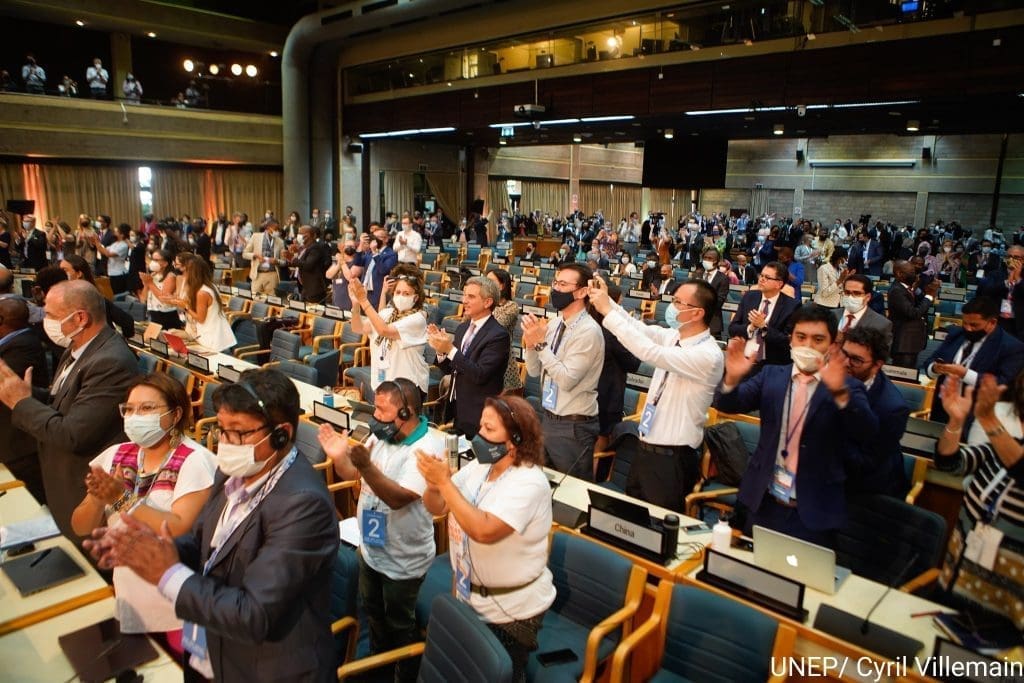
Yesterday was a historic day for the campaign to beat plastic pollution as over 3,400 in-person and 1,500 online participants comprising Heads of State, Ministers of environment, and other representatives from 175 nations, endorsed a resolution to End Plastic Pollution at the conclusion of the three-day UN Environment Assembly (UNEA-5.2) meeting in Nairobi.
The resolution, titled “End Plastic Pollution: Towards an internationally legally binding instrument”, is based on three initial draft resolutions from various nations. It also establishes an Intergovernmental Negotiating Committee (INC) which will begin its work in 2022, with the ambition of completing a draft global legally binding agreement by the end of 2024.
The legally binding instrument would reflect diverse alternatives to address the full lifecycle of plastics, the design of reusable and recyclable products and materials, and the need for enhanced international collaboration to facilitate access to technology, capacity building, and scientific and technical cooperation.
To share knowledge and best practices in different parts of the world, the UN Environment Programme (UNEP) will convene a forum by the end of 2022 that is open to all stakeholders in conjunction with the first session of the INC.
It will also facilitate open discussions and ensure they are informed by science and report on progress throughout the next two years. Upon completion of the INC’s work, UNEP will convene a diplomatic conference to adopt its outcome and open it for signatures.

This is a good call from the UNEA, especially at a time when the world is experiencing the severe impacts of climate change, nature loss, and pollution as a result of plastic production and pollution.
Research and events have established that exposure to plastics can harm human health, and potentially affect fertility, hormonal, metabolic, and neurological activity. The chemicals used in the production of plastic are toxic and detrimental to the human body. What’s more, the open burning of plastics contributes to air pollution.
According to statistics from UNEP, plastic production drastically increased from 2 million tonnes in 1950 to 348 million tonnes in 2017, making it a global industry valued at US$522.6 billion. This trend persists and doesn’t show signs of stopping anytime soon as the industry is expected to double in capacity by 2040.
Already, some 11 million tonnes of plastic waste flow into oceans annually (with projections that it may triple by 2040) and this pollution is reportedly affecting over 800 marine and coastal species through ingestion, entanglement, and other dangers.