In Nigeria, rainfall traditionally follows a predictable pattern: it begins around April, stretches through October, and is followed by the dry season from November to March. But in recent years, this cycle has begun to unravel. In 2024, the rains arrived late, only beginning in mid-May. And when they did, they were aggressive and erratic; triggering flash floods in cities like Ibadan, where viral videos showed roads and homes submerged. These downpours were not the soft, sustained rains that usually support the beginning of the planting season; instead, they brought destruction and unpredictability.
The Impact on Agriculture
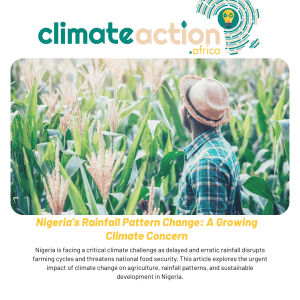
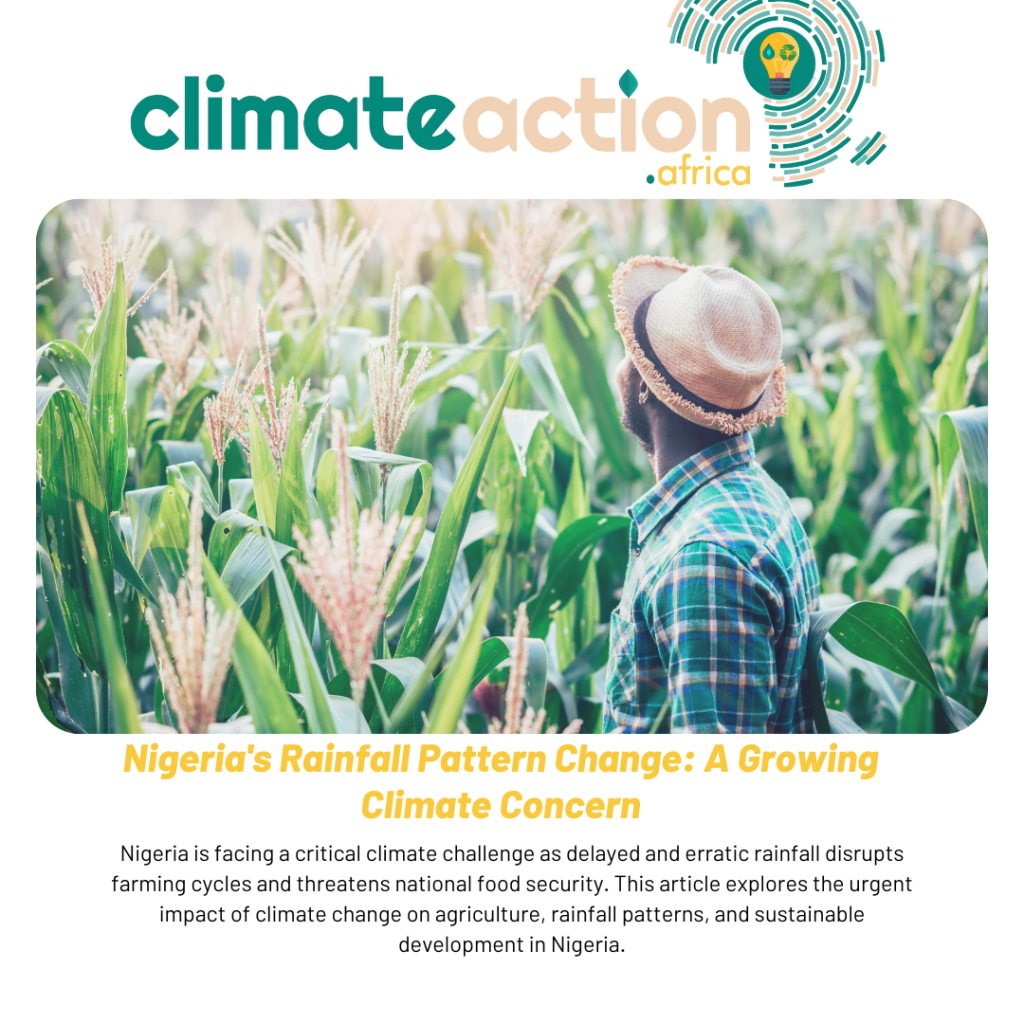
Few sectors are more vulnerable to shifts in climate than agriculture. Nigerian farmers rely heavily on predictable rainfall patterns to plant and harvest crops. The delayed rainfall has disrupted this rhythm, particularly affecting staple crops such as maize.
Typically, maize is planted in April, with May marking the vegetative growth phase. However, this year, many farms are behind schedule. The heavy rains that came after the dry delay created waterlogging, resulting in stunted growth, delayed flowering, and poor yields. Maize, which should be thriving by now, is instead struggling. As the second-largest maize producer in Africa, Nigeria normally produces between 10 to 12 million metric tons annually (FAO, 2021). This year, that figure is expected to drop significantly.
This situation is compounded by rising temperatures and the erratic nature of the rainy season, which further affect crop productivity. According to Nicholson (2013), shifts in the Intertropical Convergence Zone (ITCZ), a key determinant of West Africa’s rainfall are becoming more frequent due to global climate change, leading to delayed or shortened rainy seasons.
Expert Perspectives
Meteorologists and climate scientists agree: the irregular rainfall is not just an anomaly, it is part of a broader, more concerning trend. Climate change is altering global atmospheric systems, making weather patterns less predictable and more extreme.
The implications go beyond stunted crops. As DA News reported in August 2024, farmers are reporting increased losses, and markets are seeing rising food prices as supply chains are disrupted (DA News, 2024). For a country already battling inflation, these climatic disruptions could severely intensify food insecurity and social vulnerability.
A Call to Action
Nigeria’s delayed rainfall this year is not an isolated event. It is part of an ongoing pattern that exposes the nation’s fragility in the face of global climate shifts. Addressing this requires systemic action.
Government agencies and policymakers must invest in climate-smart agriculture. This includes:
- Improved access to drought-resistant seeds
- Scaled-up irrigation infrastructure
- Implementation of early warning systems and real-time weather alerts
- Better support systems and insurance schemes for smallholder farmers
Building a more resilient agricultural system also involves educating farmers on sustainable practices and climate adaptation. With coordinated efforts, Nigeria can lessen the blow of future climate shocks.
Conclusion
The 2024 delayed rainfall season is a clear signal: climate change is no longer a distant threat. Its effects are here, visible in every wilted maize stalk and every flooded farm. But with foresight, strategic investment, and inclusive policymaking, Nigeria can adapt. The time to act is now.
References
- FAO. (2021). Nigeria at a glance. Food and Agriculture Organization of the United Nations. https://www.fao.org/nigeria/fao-in-nigeria/nigeria-at-a-glance/en/
- Nicholson, S. E. (2013). The West African Sahel: A review of recent studies on the rainfall regime and its interannual variability. ISRN Meteorology, 2013. https://doi.org/10.1155/2013/453521
- DA News. (2024, August 15). Delayed Rainfall Threatens Food Supply in Nigeria. https://dareakogun.com/delayed-rainfall-threatens-food-supply-in-nigeria